Navigating auto insurance can be a nightmare, especially when you try to understand the difference between liability vs full coverage. Opting for the right type of policy is important, as that directly impacts the financial security for the event during the accident. This guide will break down those under types of auto insurance coverage that will help you make an informed decision that can protect both your vehicle and your wallet as well.
What are the Main Types of Auto Insurance Coverage?
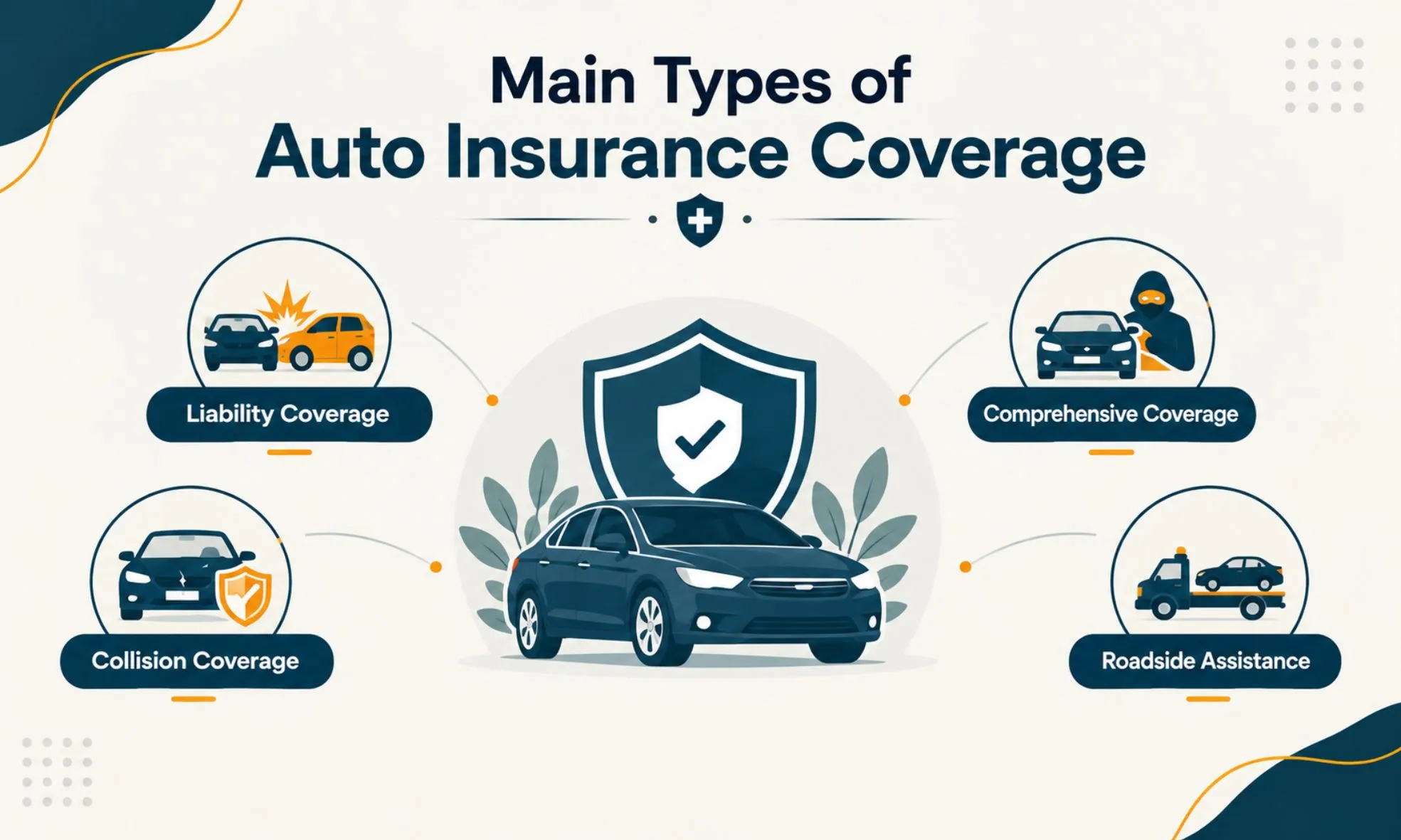
Before you go deep into the details, here’s the basic comparison for different coverages available:
What Is Liability Car Insurance?
The liability car insurance is the major foundation that’s needed in almost all states. This does not pay for your own vehicle damage or injuries. Instead, this protects you from financial responsibility for others if you are at fault in the accident.
- How Liability Insurance Works
The liability insurance will pay for the other party’s eligible costs when you cause an accident. For primary, this protects your personal assets (like the home or savings) when that’s being seized for paying towards someone else’s medical bills or repairs.
- Bodily Injury Liability
This will cover injuries that you caused to the person in an accident. This will help in paying for their medical bills, legal fees, or lost wages if they can sue you.
- Property Damage Liability
This will cover damage that’s caused by you to another person’s property or vehicle, like the building or fence. For instance, if you rear-end another person’s car, the property damage liability will cover the cost for repairing the bumper of that car. Repairs like this are usually carried out under auto shop insurance coverage, whichprotects the repair facility while your vehicle is in their care.
- Is Liability Insurance Enough?
The liability-only coverage will make sense if you have driven a low-value, old car and just have substantial savings for replacing that yourself. Although the major risk of having that minimum coverage goes high. If you happen to be engaged in a severe accident, the minimum limits that can cover it for total damages thus leave your personality liable for that difference. Do consider the total assets plus financial situation as well.
This is where the liability vs comprehensive insurance actual difference is.
What Does “Full Coverage” Mean?
The “full coverage” is actually not an official term. This is just a basic colloquial combination of liability, coverage along with the comprehensive. The perfect meaning can change based on consumers and insurers, so that’s vital towards asking the agent on what’s included.
What Does Full Coverage Usually Include?
A basic standard full coverage car insurance package that can include:
- Collision Coverage (for your car in a trash)
- Liability protection (towards others)
- Comprehensive/Complete Coverage (for the car from the non-collision events).
What Does Full Coverage NOT Automatically Cover?
Even with the “Full coverage” that is protected against everything. This will not automatically cover:
- Mechanical breakdown for that routine maintenance.
- Basic wear and tear.
- Those personal belongs that’s left inside the car.
- Each possible loss or accident (Policies that are always have those specific exclusions)
What is comprehensive car insurance?
The comprehensive car insurance that will cover damages to your vehicle that’s caused by the collision:
What Does Comprehensive Insurance Cover?
Some of the common events that include
- Attempted theft or theft.
- Fire
- Vandalism
- Wind, hail, and certain weather damage.
- Falling objects like the tree branches, etc.
- The animal-related damage (as in hitting a deer)
What Does Comprehensive Insurance Not Cover?
This does not cover collision damage, mechanical failure, routine maintenance, or the losses that are excluded for the policy wording.
- Comprehensive vs. Collision
The basic way for understanding the full coverage vs. comprehensive or collision for the practical examples:
- Comprehensive: The car is damaged through hail.
- Collision: The car hits another vehicle.
- Comprehensive: The car that’s stolen from the parking lot.
- Collision: The car swerves or hits a telephone pole.
Note: The complete coverage is for those non-collision losses, while the collision coverage can address covered collision-related damage. If your car is ever left in someone else's care,such as at a repair facility, it's worth reading a garage liability insurance guide tounderstand how that coverage differs from your own auto policy.
Liability vs. Full Coverage vs. Comprehensive: Key Differences
For comparing the liability vs. comprehensive insurance for the full coverage, the basic side-by-side breakdown that can clarify the protections:
*Full coverage/complete coverage means the combination of collision, liability, and comprehensive coverage.
Which Auto Insurance Coverage Is Right for You?
- Liability Can Make Sense: If you got a low-value, older vehicle, you need those lower premiums, you will not need to replace the vehicle yourself, and you’re comfortable accepting the financial risk.
- Full Coverage That Can Make Sense: You can own the more valuable or newer vehicle, you want the protection for your own vehicle, and you have that lease or loan (that usually requires it) that needs the broader financial protection.
- Comprehensive Can Be Worth Considering: The vehicle faces a higher level of theft risk, you live in that area for the frequent weather risk, or you couldn’t afford the vehicle that’s covered for non-collision loss.
How Much Auto Insurance Coverage Do You Need?
Determination of the needs will depend on multiple factors:
- State Minimum Requirements: The basic line that you need to meet.
- Vehicle value: Those newer cars that justify that’s the coverage.
- Lease or Loan requirements: Lenders that mandate full coverage.
- Personal financial plus emergency savings: Can they afford the total loss for the out-of-pocket?
- Driving habits plus local risks: High theft or high traffic that can increase risk.
- Desired Liability Limits: : The higher limits that can protect the assets.For drivers who want protection beyond their policy's standard limits, commercial umbrella insurance coverage isa useful concept to understand, since umbrella policies work on the sameprinciple of extending liability protection.
Note: The state insurance requirements plus the available coverage options can vary, so these readers check the state’s current rules for their insurer’s policy terms.
How Deductibles Affect Your Auto Insurance
The insurance deductible is the amount for paying out-of-pocket before the insurer pays the rest for the covered claim. The deductibles apply for comprehensive plus collision claims:
- Lower Deductibles: Those premiums, but the less-of-pocket costs for the claim.
- Higher Deductibles: Lower premiums, for the more-of-pocket during the claim.
For instance, if you need the $500 deductibles that cover the repair costs of $3,000, you can generally pay the $500 deductibles that the insurer can pay for the eligible amount that is subject to the policy. They always choose the deductible that will realistically be for the claim.
How Much Does Auto Insurance Cost?
Instead of those fixed prices, these premiums are calculated for the several factors: driving and age history, vehicle model/make year, location, deductibles, coverage limits, credit-based insurance, and claim-history factors that are selected for the coverage level. Larger vehicles follow a similar logic; forexample, commercial truck insurance costs arecalculated using many of the same risk factors, just applied at a bigger scale.
General Cost & Protection Comparison
Note: The actual premiums can be substantial for vehicles and drivers plus locations, so the average is not treated for the guaranteed quotes.
Common Mistakes When Choosing Auto Insurance
- Assuming “full coverage” means absolutely that’s covered.
- Choosing the coverage that’s based on price.
- Selection of deductibles that’s difficult for the emergency.
- Buying the state-minimum liability for considering the total exposure.
- Not checking the exclusions plus coverage limits.
- Forgetting the review coverage for purchasing the different vehicles.
How to Choose the Right Auto Insurance Coverage
Following those simple steps for approach:
- Checking the state’s minimum for legal requirements.
- Determining the vehicle’s current actual value.
- Checking the lease or lender agreement towards the mandatory coverage.
- Evaluation of the financial loss you can comfortably afford.
- Deciding the weather, comprehensive coverage, or collision is worthwhile for the car’s value.
- Comparing the deductible options or the liability limits.
- Comparing quotes from the multiple reputable insurers
- Reading exclusions plus policy terms for careful purchasing.
Frequently Asked Questions
Is liability insurance enough?
For the drivers, actually no. While this meets legal minimums, liability insurance does not cover the medical bills or vehicle repairs. If the car is valuable for the assets for protection, adding in a collision that’s comprehensive is recommended.
What is considered full coverage car insurance?
The “full coverage” is not the official policy purpose. These are the common terms for describing the policy, which will combine the state-required insurance for both collisions plus complete coverage/comprehensive coverage, offering the broad protection for other vehicles.
Is comprehensive insurance the same as full coverage?
No, the comprehensive insurance will cover non-collision events like the fire, theft, or hail. The full coverage is comprehensive, including liability insurance or collision.
Does comprehensive insurance cover accidents?
No, the comprehensive coverage specifically excludes the accidents that involve the collision of an object or another vehicle. Those are covered for collision insurance.
Does full coverage include liability insurance?
Yes, the standard full coverage policy always includes the liability insurance for covering damages plus injuries that you can cause towards others, alongside the comprehensive or collision coverage for damages to your own vehicle.
Do I need comprehensive and collision coverage?
If you own the car outright, that’s for low-value or older; you don’t need them. Although you have the lease or car loan, the lender will require both.
Can I have comprehensive coverage without collision?
Yes, you can purchase a will that covers independence for collision coverage. This is somehow done for those older cars that are at higher risk towards theft as well as weather damage but not worth the cost for collision damage.
What happens if I only have liability insurance and my car is damaged?
If you need the liability insurance and your car gets damaged under an accident that you caused or through a non-collision event like the hail, the insurance will pay for the repairs. You need to pay for it through your pocket, and that can also include costs like towing your vehicle from the accident scene, since knowing the tow truck insurance requirements in your state can clarify who's responsible for that expense.