Running in a retail store is a major venture, but that comes with a unique set of daily challenges. From the management of foot traffic to the protection of valuable merchandise, the shop owners can face hazards that will quickly derail that business. The Retail Store Insurance is a major safety net that’s designed for protection of your physical location, your employees, your inventory, and your financial future. Whether you’re running a small shop or a boutique, or a busy grocery store or a big electronics shop, you need to have the right retail business insurance that can ensure that an unexpected accident or disaster won't close the door of your business. The guide will break down in an exact manner for insurance for retail stores that can entail and how that can be secured the right type of protection for the shop.
Why Do Retail Stores Need Insurance?
The retail environments are high-traffic zones that are filled with the unique vulnerabilities. Employees that handle heavy merchandise, customers that are browsing aisles, plus the valuable inventory insights that will sit in an open manner for shelves. Without any kind of retail shop insurance, a single customer slip and fall, a break-in, or a burst pipe—all this can result in devastating financial loss.
The retail store insurance will ensure that they can recover from those kinds of unexpected events without draining all the business savings or facing bankruptcy.
Furthermore, lenders and landlords, along with local municipalities, do require certain types of commercial insurance for the retail stores before you can open doors or even sign a lease.
Types of Retail Store Insurance Coverage
General Liability Insurance
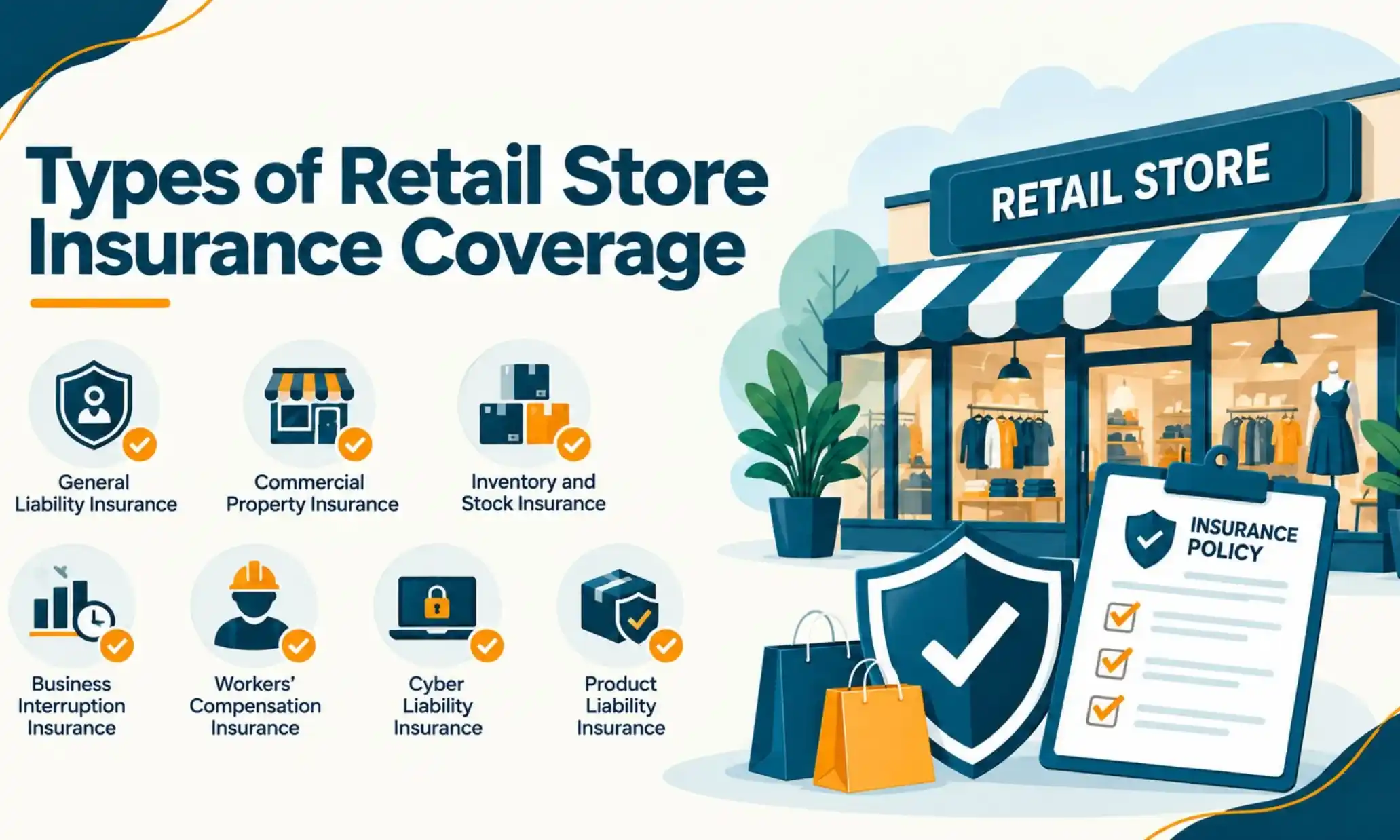
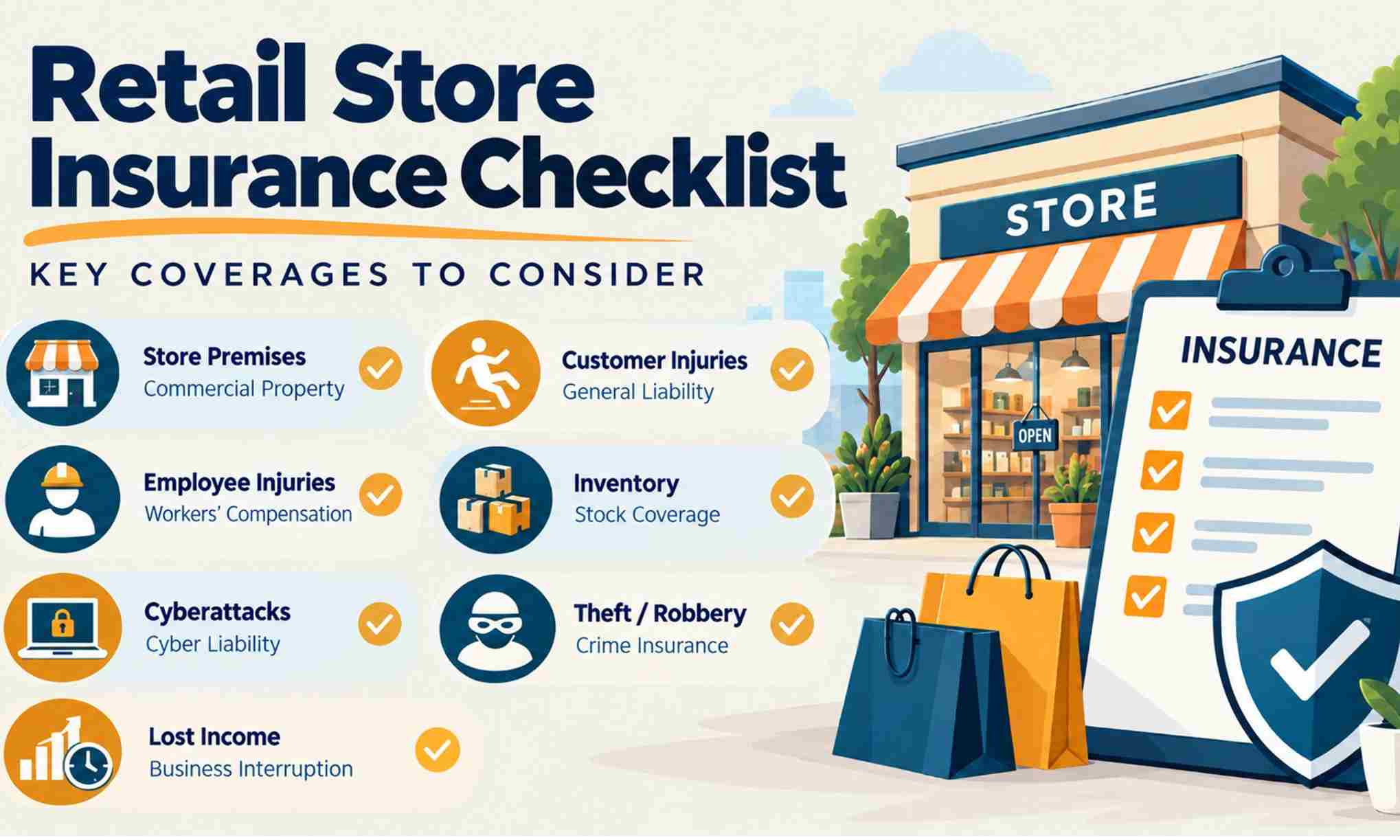
This is the right foundation of retail store liability insurance. This protects your business if the customer gets injured on the premises (as in slipping on a wet floor) or if your operations can cause third-party property damage. This covers legal defense costs along with medical bills.
Commercial Property Insurance
This is the retail property insurance that covers the physical building you own. This protects certain structures, along with signage, permanent fixtures, and coverage against perils like wind, vandalism, fire, or hail, along with built-in equipment. Learn how commercial property insurance differs from liability coverage.
Inventory and Stock Insurance
Also known as retail inventory insurance, this can protect the movable items that your business owns, like the display cases, cash registers, computers, and even furniture, so your retail business insurance coverage is complete even when you don’t own the building.
Business Interruption Insurance
If the covered event (like the fire) can force the store to close temporarily, this type of coverage replaces the lost time and income and helps pay in ongoing fixed expenditures, like the rent, payroll, or utilities, when that gets rebuilt.
Workers' Compensation Insurance
Generally and legally needed in all the states, almost if you get employees, this covers a portion of lost wages or medical expenses of workers who become ill or injured on the job. Read our detailed guide on workers' compensation insurance.
Crime and Theft Insurance
Shoplifting, external theft, and dishonesty of internal employees are basic threats to the profit margins of a retailer. This coverage will help your business from different kinds of financial losses, like burglary, robbery, or even employee fraud.
Cyber Liability Insurance
If the store has an e-commerce site, processes credit cards, or collects customer data, the cyber liability insurance will cover the costs for hacking, data breaches, and ransomware attacks for the required customers.
Product Liability Insurance
If the product you manufacture, sell, and distribute causes bodily injury or property damage for a customer, the coverage will protect you from resulting in the legal claims plus medical costs. Stores that resell other brands' products should also read about vendor liability insurance.
Commercial Auto Insurance
If your business owns or leases vehicles for vendor runs, deliveries, or errands, the commercial insurance for retail stores will cover accidents, liability, or vehicle damage that involves those specific business vehicles.
Retail Store Insurance Coverage at a Glance
Common Risks Retail Store Owners Should Prepare For
The effective retail business risk management means anticipating what could go wrong before that happens. Here are the most common retail business risks that you prepare for:
- Customer Slip-and-Fall Accidents: Uneven mats, wet floors, or the cluttered aisles that will lead to those customer injuries, making the robust retail store liability fully critical.
- Theft and Shoplifting: External theft for the shoplifters, plus internal theft for the dishonest employees, or those constant threats for your inventory, plus the bottom line.
- Fire and Smoke Damage: Faulty wiring, electrical faults, or heating equipment that can create fires and destroy the building and other items targeted under the retail inventory insurance.
- Water and Weather Damage: Roof leaks, burst pipes, or severe regional storms that can damage flooring, ruin merchandise, or even halt everyday operations.
- Employee Injuries: Slipping in stockrooms, lifting heavy boxes, or the repetitive strains that can lead towards the costly workers' compensation claims.
- Product-Related Injuries: Selling defective items can result in serious lawsuits, highlighting the absolute need for strong products for liability coverage.
- Data Breaches and Cyberattacks: Retailers are the prime targets for those hackers that are seeking customer payment information, making it cyber liability for modern plus growing retail store insurance risk.
- Equipment Failure: A broken refrigeration system for the crashed POS system for the stop sales for their tracks, along with spoiling those perishable goods.
- Business Interruption: As that's a majorly covered loss that can force you towards temporary closure, threatening the cash flow along with the ability to pay those fixed overhead costs.
How Much Does Retail Store Insurance Cost?
Through the agency Coverdash, that was shared for the following cost with the NerdWallet 2026. We will be recommending the BOP for most of the retail businesses:
The costs of retail insurance that can depend on these ranges of factors include:
- Number of policies: The more insurance that you need, the more you’ll need to pay.
- Business Location: Some of the states have better risks for natural disaster or crime rates than others, for example.
- Number of employees: The more people that work for your business, the more potential towards the customer interactions that will spark lawsuits or the workers' or compensation claims.
- Previous Claims History: If you’ve filed a claim before, the premium costs can easily go up.
- Business Property and Inventory: The higher inventory you have, for instance, the more that can cost to replace it after a disaster. That can up the costs for property insurance.
- Nature of Business: The convenience stores can have higher theft risks for the flower shops since they're generally open later and keep the cash on the site.
- Policy deductible and limits: That can lower your deductibles and even raise your limits; the more the insurance policy that you have to pay out for filing a claim. This generally means the premiums will be higher.
Common Retail Store Insurance Coverage Gaps
- Failing to update the policy to reflect the true and current replacement value for your high-value or seasonal stock.
- Carry in the minimum-liability limits that get exhausted quickly through a single lawsuit for customer injury.
- Relying on the basic liability for covering data breaches, which actually includes cyber incidents entirely.
- Selling imported goods or those specific high-risk items that are excluded for that specified policy wording.
- Assuming the general theft coverage that includes employee frauds, that often requires a specific type of crime policy endorsement.
- Not having the perfect equipment coverage, thus leaving you to pay out-of-pocket for those costly, sudden mechanical failures.
- Using it in certain personal vehicles for business deliveries without any kind of commercial auto endorsements that leads towards claim denials.
How Retail Store Owners Can Reduce Insurance Risks
You can lower the premiums and protect your business by implementation of stronger risk management practices. Keeping the aisles clean, free of trip hazards, and well-lit. Install the security cameras and anti-theft tags. Do require the employees to undergo regular safety as well as cybersecurity training. Maintain the building and equipment in a regular manner for preventing unexpected failures, and keep the detailed plus up-to-date inventory records.
Retail Store Insurance Checklist
How to Choose the Right Retail Store Insurance
- Assess Your Store's Risks: Identify the specific hazards that your store/shop faces each and every day, from the high-value merchandise to heavy foot traffic plus delivery operations.
- Determine Your Property and Inventory Values: Calculate the perfect replacement costs of building, current stocks, and fixtures for avoiding being dangerously understood.
- Review Liability Exposure: Consider the nature of your products plus customer interactions for determining the right quality limits plus truly protect your assets.
- Identify Coverage Gaps: Compare the current policy against the checklists as in the above towards understanding what gets excluded and what your out-of-pocket costs are.
- Work With an Experienced Insurance Professional: Partner with a right broker that specializes in commercial insurance for retail stores. They will tailor the policy to your specific needs, plus help you navigate the complicated industry requirements.
Not sure how to pick one? Here are our tips on choosing a commercial insurance broker.
Frequently Asked Questions
1. What insurance does a retail store need?
At the minimum, the retail store requires general liability and commercial property insurance. Most also need workers, inventory coverage, and business interruption insurance.
2. How much does retail store insurance cost?
The retail store insurance generally ranges from $500 to $3,000+ annually, which depends on the store size, revenue, location, and the stolen merchandise.
3. Does general liability insurance cover customer injuries?
Yes, the general liability that’s specifically designed for covering the medical expenses along with legal fees if the customer gets injured on your premises.
4. Do retail stores need product liability insurance?
If you manufacture, distribute, or sell those physical goods, the product liability insurance is actually recommended for protecting against the claims that the product will cause harm.
5. Does retail store insurance cover inventory?
Yes, that’s generally covered under the business personal property or the specific inventory/stock coverage endorsement. Do ensure that the policy limits can match your current inventory value.
Protect Your Retail Business With the Right Insurance Coverage
The retail store is a lot more than just business; this is your livelihood and your dream. The comprehensive retail store insurance will ensure that when any kind of unexpected event happens, you get the financial backing to recover that quickly plus keep the doors open. Do not leave the shop vulnerable to the retail store insurance risks.
Take the time to assess the unique needs, compare different options, and partner with the trusted insurance professional. By securing the right kind of business insurance coverage today, you get the confidence to focus on what you can do best: serving your customers and growing your brand, along with creating a great business future.
Do understand, the business environment is evolving, and so are the potential threats you face, from the shifting supply chains to the emerging cyber threats. A right kind of proactive approach is getting the insurance strategy and means in conducting those policy reviews along with updating coverage of inventory, storefront expansion, or staff. Don’t wait for the crises to reveal the coverage gaps. Invest in the peace of mind now, and safeguard the hard work that you've poured into retail businesses for later years to come.