Management of employee healthcare is a massive responsibility. For the companies that offer those self-funded health plans, the stop-loss insurance is a major safety net. This type of guide will explain what is stop-loss insurance, and how it works and why that’s important for the protection of a company's bottom line.
What is stop-loss insurance?
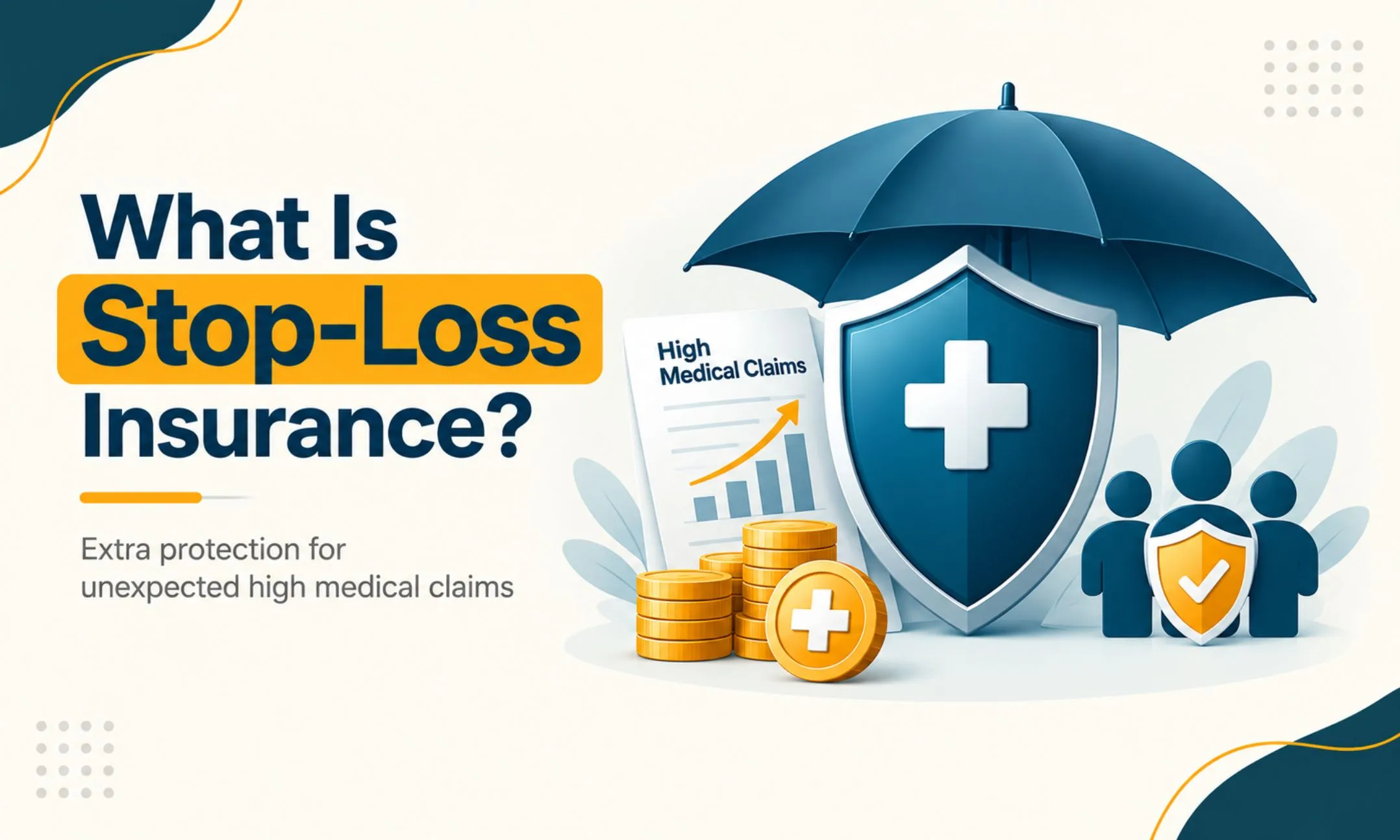
The stop-loss insurance for employers is a custom policy that's made to protect companies from major healthcare claims. This is a major financial backstop for those businesses that pay medical claims for their employees in a direct way.
Stop-Loss Insurance at a Glance
Important aspect: The stop-loss insurance will not replace the health plan of your employer. This provides financial protection to that employer who’s behind the health plan.
How Does Stop-Loss Insurance Work?
Understanding the aspect of how does stop-loss insurance work in reality is straightforward. This follows a basic 3-step process:
- Employers fund the employee healthcare claims directly as that occurs.
- When these claims reach that stop-loss insurance deductible, the main protection will kick in.
- The insurer will reimburse those eligible claims based on the stop-loss insurance policy terms, thus protecting the employer from major financial loss.
Types of Stop-Loss Insurance
- Specific Stop-Loss Insurance
This can protect against those usual high claims for that employee or those covered individuals. This is a major deductible.
For instance, for the employee who has the $100,000 medical claims for that specific deductible for $50,000, the insurer reimburses the $50,000 that can exceed the limit.
- Aggregate Stop-Loss Insurance
This can protect it against unexpected higher total claims for the entire employee population. This uses the aggregate deductible.
For instance, for the total expected claims for the year that are $500,000 for that aggregate deductibles that’s a set of 125% around $625,000, the insurer will pay the claim that exceeds the $625,000.
Specific vs. Aggregate Stop-Loss Insurance
Tip: Employers that need to use major types of stop-loss coverage for the creation of border protection for those self-funded health plans.
Why Do Employers Use Stop-Loss Insurance?
Employers that use the employer stop-loss insurance under:
- Limiting exposure for those healthcare expenses.
- Making healthcare costs highly predictable.
- Protecting the cash flow.
- Reducing the financial uncertainty.
- Supporting the self-funded health plans strategies.
Supporting the self-funded health plans strategies. Beyond healthcare costs, employers also carry other workforce-related risks worth understanding, such as those addressed by employment practices liability insurance, which protects against claims tied to hiring, termination, and workplace conduct.
Key Benefits of Stop-Loss Insurance
- Better budgeting
- Financial protection
- Great control for the health benefits
- Protection from those catastrophic claims.
Important: The stop-loss coverage can reduce the employer’s financial exposure, for the policy deductibles, exclusions, contract terms, and limits that can determine how much protection that’s available.
What Does Stop-Loss Insurance Cover?
For a standard stop-loss insurance policy, it covers:
- Individual catastrophic claims.
- Higher-cost medical claims
- Aggregate claims that are above the applicable threshold.
What May Not Be Covered?
- Claims outside that are eligible for the plan terms
- Policy exclusions
- Expenses that are subject to limitations.
- Contract-specific for exclusions.
Note: Coverage varies for insurers plus policies, so the employers need to review those specific terms, exclusions, claim requirements, and reimbursement provisions for purchasing the coverage.
How Much Does Stop-Loss Insurance Cost?
There is no single standard price for the stop-loss insurance costs. The stop-loss insurance premiums can depend on the risk factors, that includes to the number of employees, claims history, demographics, industry, specific plus aggregate deductibles, plan design, and coverage limits:
Factors That Affect Stop-Loss Insurance Cost
Stop-Loss Insurance vs. Fully Insured Health Insurance
Note: The right type of approach surely depends on employer size, risk tolerance, resources, and healthcare strategy.
What Should Employers Consider Before Buying Stop-Loss Insurance?
Before you take this insurance, do evaluate these points:
- Aggregate deductible
- Specific deductible
- Policy limits
- Coverage exclusions
- Contract basis
- Claim reimbursement terms
- Expected claims and risk tolerance
- Insurer's financial strength
- Renewal conditions, which are easier to track by following a business insurance renewal checklist each year before terms and pricing are finalized
Important: Employers need to carefully review the policy language and understand what type of reimbursement can apply before selection of a stop-loss insurance policy.
Pros and Cons of Stop-Loss Insurance
Is Stop-Loss Insurance Right for Your Business?
The stop-loss insurance for self-funded health plans will make sense when you need to control those plan designs plus have the cash reserves for handling those routine claims. The larger employers do consider those self-funded arrangements towards cost savings, plus the employers have to evaluate risks.
Tip: The employers need to evaluate their workforce size, claim history, and financial capacity, plus risk tolerance, before you decide whether this type of coverage can fit the benefit strategy.
Frequently Asked Questions
What is stop-loss insurance in simple terms?
This is an important financial safety net that can reimburse those employers for those higher healthcare claims and protection of those business finances.
Is stop-loss insurance the same as health insurance?
No, the health insurance will pay for the employee’s medical care. The stop-loss insurance will reimburse that employer for those types of payments that exceed certain limits.
What is a specific stop-loss deductible?
This is the maximum amount the employer agrees to pay towards the single employee's medical claims, as the insurer can reimburse the rest.
What is aggregate stop-loss insurance?
This can protect employers when those combined claims for all the claims exceed a certain value of the annual limit.
Who pays for stop-loss insurance?
The employer pays the stop-loss insurance premiums directly for the insurance carrier.
Is stop-loss insurance required for employers?
This is not actually required legally, but this is highly recommended plus practically necessary for those self-funded plans for avoiding bankruptcy.
How does stop-loss insurance protect self-funded employers?
This caps the employer’s financial liability, thus ensuring the catastrophic illness for a year towards high claims that does not devastate those businesses.
Is stop-loss insurance worth it for small businesses?
This can be for small companies that carefully will weigh the stop-loss insurance deductible and premium costs for their ability towards absorbing those unexpected claims.