If you run a construction business, you've probably heard both terms thrown around in the same breath, sometimes even by your own agent. “You need builders risk.” “You need general liability.” “You probably need both.” For a lot of contractors, that's where the clarity ends and the confusion begins.
Here's the short version: builders risk protects the project itself, while general liability protects you from claims made by other people. They sound similar because they both fall under “construction insurance,” but they respond to completely different kinds of losses. Mixing them up, or assuming one covers what the other doesn't - is one of the most common (and most expensive) mistakes contractors make.
In this guide, we'll break down exactly what each policy does, where they overlap, where they don't, and how to make sure your business isn't left holding the bill for a gap you didn't know existed.
What is Builders Risk Insurance?
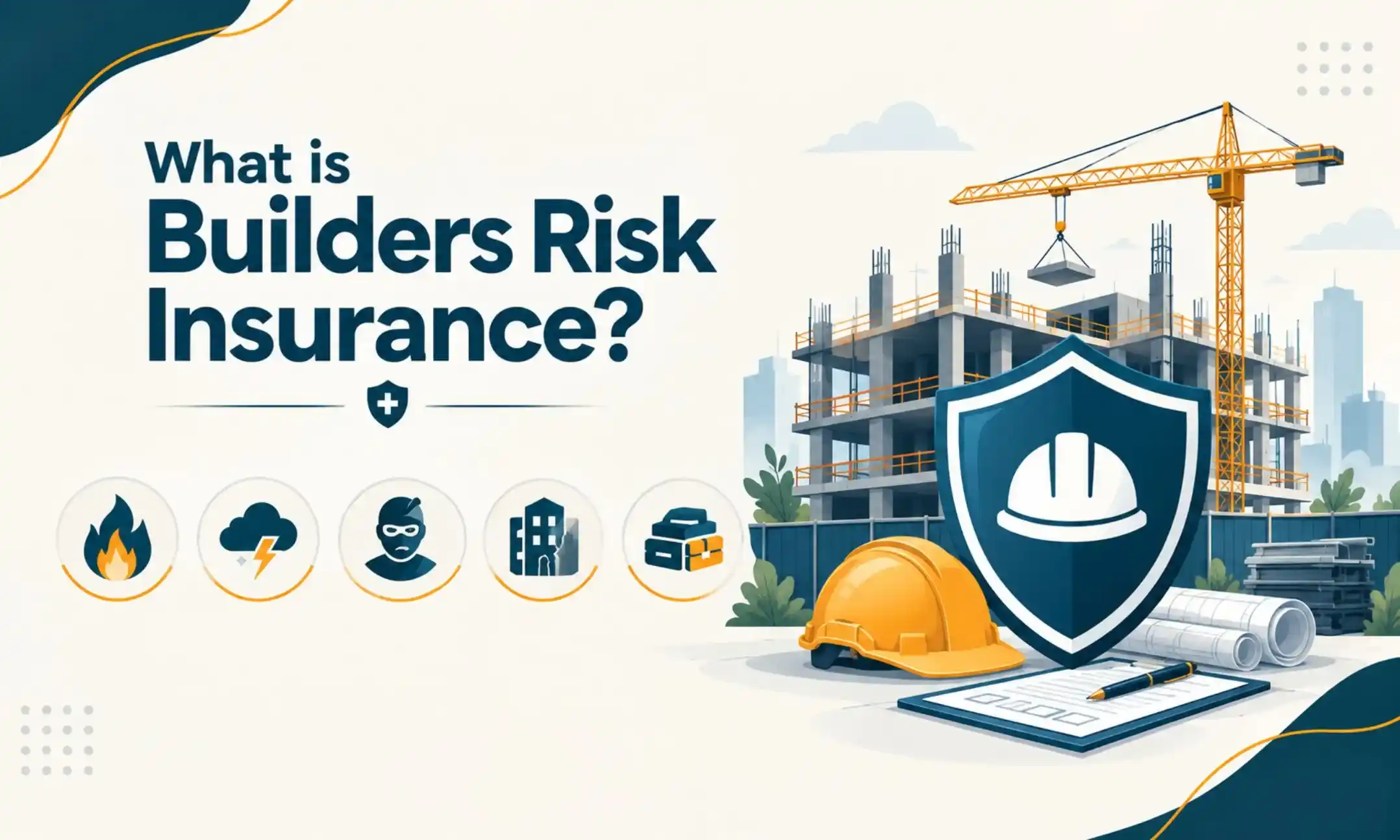
Builders risk insurance is a temporary, project-specific property policy. It covers physical damage to a structure while it's under construction, renovation, or repair, along with the materials and equipment that are part of that project.
Think of it as insurance for the building itself, not the people around it. If a fire tears through a half-finished framing job, if a storm rips the roof off before it's sealed, or if lumber staged on-site gets stolen overnight, builders risk is the policy that responds.
Coverage typically includes:
- The structure under construction
- Building materials on-site, in transit, or in temporary storage
- Scaffolding, fencing, and other temporary structures (often as an add-on)
- Fixtures and equipment intended for permanent installation
Builders risk coverage starts when construction begins and ends once the project is complete - it's not a standing policy you renew every year like most other business insurance. If you're managing several jobs, this is exactly the kind of coverage worth mapping out project by project, similar to how we've broken down the essential insurance policies for a construction business in an earlier guide.
NOTE: Builders risk usually excludes faulty workmanship, design errors, and normal wear and tear. It's built for sudden, accidental physical loss - not for fixing a mistake your crew made.
What is General Liability Insurance?
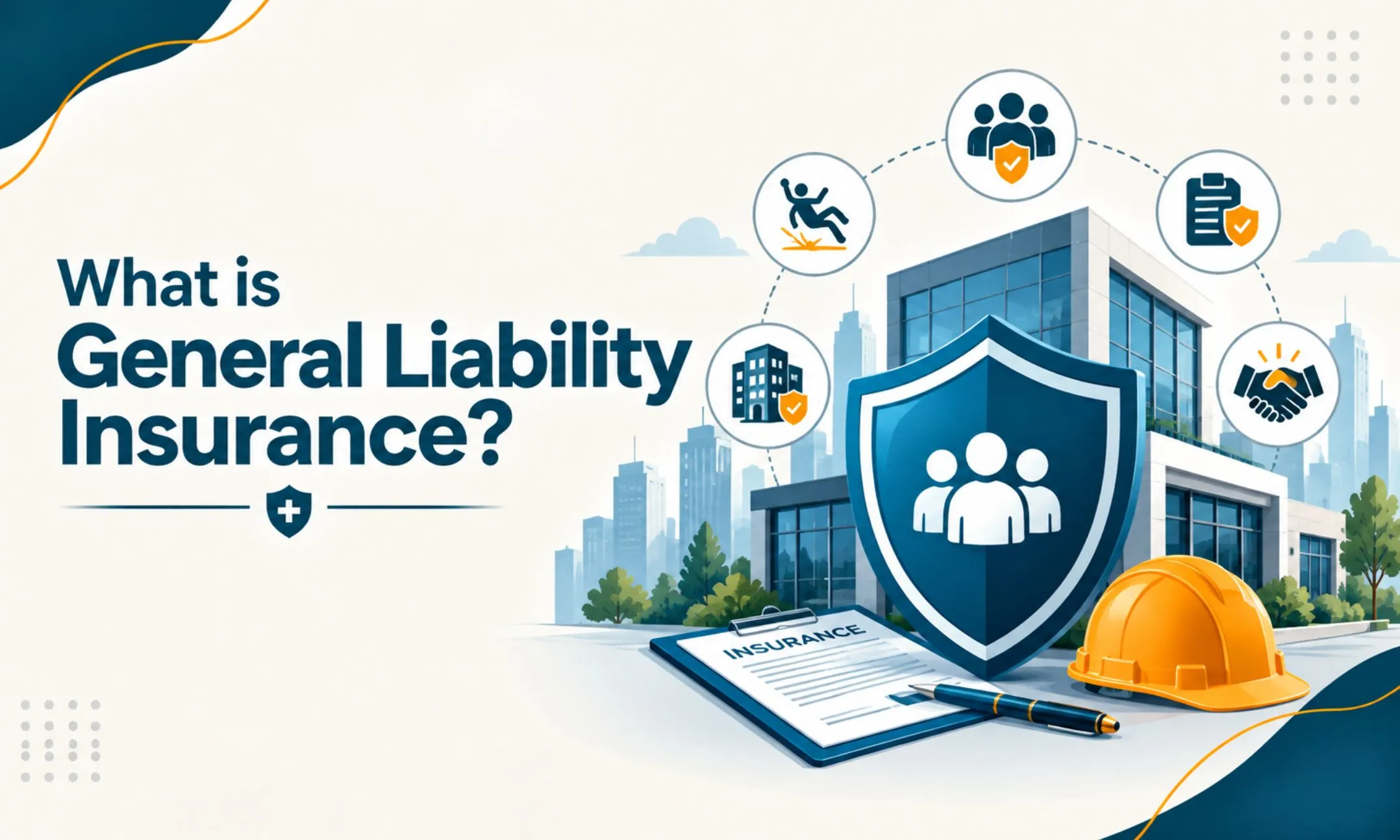
General liability (GL) insurance is a third-party policy. It doesn't cover damage to your project, it covers claims made against your business by people outside of it: a visitor, a neighbor, a client, or the public.
If a delivery driver trips over exposed rebar and gets hurt, if a subcontractor's equipment damages a neighboring fence, or if your crew accidentally sends debris through a client's window, general liability is what steps in to cover medical costs, legal fees, and settlements.
Standard GL coverage typically includes:
- Bodily injury to third parties
- Property damage caused to others
- Personal and advertising injury (like libel or copyright disputes in your marketing)
- Products and completed operations protection against defects that surface after the job is done
Unlike builders risk, general liability isn't tied to a single job site. It runs continuously, covering your business across every project, every year, for as long as the policy is active. This is why it's considered a baseline requirement across almost every trade — something we've covered in more detail when looking at industries that rely most heavily on general liability coverage.
Builders Risk vs. General Liability: Key Differences at a Glance
Here's where the two policies stack up against each other side by side:
At a glance, the difference comes down to this: builders risk insures the project. General liability insures everyone around it.
Who Actually Needs Each Policy?
This is where a lot of confusion starts, because the answer isn't always “everyone needs both, equally.”
Builders risk is usually purchased by whoever is financially responsible for the structure until it's handed over - often the property owner, developer, or general contractor. On a large commercial build, the GC or owner typically carries it. On a residential custom home where the contractor is the builder, the contractor usually buys it themselves. Many construction loans require proof of builders risk before a lender will release funds.
General liability, on the other hand, is something every contractor and subcontractor on the job should carry individually - the electrician, the plumber, the roofer, the framing crew. Each one is a separate business with its own third-party liability exposure, regardless of who owns the builders risk policy.
NOTE: Just because the GC has builders risk doesn't mean subcontractors are off the hook for their own general liability. Contracts almost always require every sub to carry their own GL policy and name the GC as additional insured.
Specialty trades add their own wrinkles here too. A pool contractor, for instance, deals with both construction-phase exposure and long-term liability once the pool is in use, something we've explored specifically for pool and spa contractors, where standard trade coverage often needs to be adjusted for the unique risks of that work.
Can You Have Both Policies at the Same Time - And Should You?
Yes, and in most cases, you should. These aren't competing policies; they're complementary ones covering entirely different exposures. A single incident on a job site can even trigger both policies at once, each responding to a different part of the loss.
Example: A storm blows through mid-construction. Part of the unfinished roof collapses, damaging the building materials underneath, that's a builders risk claim. At the same time, a piece of debris from the collapse damages a parked car belonging to a neighbor, that's a general liability claim. Same storm, same job site, two completely separate policies doing two completely separate jobs.
Carrying only one of these leaves a real gap. GL doesn't pay to repair your own project. Builders risk doesn't pay for the neighbor's dented car. If you're building out your coverage stack from scratch, it helps to first understand how much coverage your business actually needs before deciding where to allocate your budget between the two.
The Gaps Contractors Miss Most Often
Even contractors who carry both policies can end up under-protected because of a few recurring blind spots:
- Faulty workmanship falls between the two. Builders risk generally excludes the cost of fixing defective work, and standard GL policies have their own work-product exclusions. If a defect causes damage rather than just needing a redo, coverage can get complicated fast.
- Completed operations is easy to overlook. Once a project wraps and builders risk ends, only general liability's completed-operations coverage protects against defects that surface months or years later- like a railing that was installed incorrectly and fails after the client has moved in.
- Testing and commissioning phases are commonly excluded from builders risk, right when complex mechanical or electrical systems are most likely to have problems.
- Subcontractor coverage can default back to you. If a sub doesn't carry adequate GL, and their work causes third-party damage, your business can end up absorbing the exposure depending on how your contracts are written.
NOTE: Read your construction contracts carefully, many specify exactly who is responsible for purchasing builders risk, and lenders or property owners will often require documentation before a project even breaks ground.
How Much Do These Policies Typically Cost?
Pricing for both policies depends heavily on the scope and nature of the work, so there's no universal number, but here's a general sense of how they're structured:
- Builders risk is usually priced as a percentage of total construction value, commonly landing between 1% and 5% depending on the project type, location, and materials involved. It's a one-time premium for the life of the project rather than a recurring annual cost.
- General liability is priced annually based on your revenue, payroll, trade classification, and claims history. High-hazard trades - like roofing or excavation, will see higher premiums than lower-risk professional trades.
NOTE: Bundling coverage with the right carrier, maintaining a clean claims history, and accurately classifying your trade can all meaningfully affect what you pay for both policies. It's worth getting a tailored quote rather than assuming a flat industry rate applies to your business.
Choosing the Right Coverage for Your Construction Business
The safest approach for most construction businesses is straightforward: carry general liability continuously, and add builders risk on a per-project basis whenever you're responsible for a structure under construction. Treating them as interchangeable, or assuming one makes the other unnecessary - is exactly how coverage gaps happen, usually at the worst possible time.
Every trade and project size comes with its own combination of exposures, whether you're a general contractor managing multiple active job sites or a specialty trade handling a narrower scope of work. Reviewing your current contracts, project types, and subcontractor agreements is the best starting point for figuring out exactly where your coverage stands today, and where it needs reinforcement.
If you're not sure whether your current policies actually cover what you think they do, working with an agency that specializes in tailored construction insurance programs is the fastest way to close the gap before it becomes a claim you're paying for out of pocket.